Apple breaks its 16-year "tradition": The touchscreen MacBook is late but here. Is the most awkward one the iPad Pro?
It turns out that Apple's "ancestral teachings" are usually meant to be broken.
According to Bloomberg, Apple is preparing two brand - new MacBook Pro laptops, with model codenames K114 and K116 respectively, and they will be released as early as the end of 2026. However, the "new" here is different from the past "new" minor upgrades that only involved processor updates. In addition to replacing the screens with OLED panels, these two products will also support full - screen touch and introduce the "Dynamic Island" design from the iPhone.
Yes, the interaction method that was criticized by Steve Jobs as an "ergonomic disaster" and rejected by Apple for a full sixteen years is likely to become a standard feature on Macs.
The "demand" for touch - enabled Macs has always existed
In fact, the discussion about "touch - screen Macs" has never stopped. Previously, we talked about how the third - party accessory Magic Screen achieved its goal "by a circuitous route" through an external panel, and also explored the technical feasibility of running macOS on an iPad.
But this time, Apple no longer intends to let users look for alternatives through third - party accessories. Instead, it has decided to take matters into its own hands and break the interaction gap between the MacBook and the iPad. In the view of Lei Technology, Apple's decision to compromise in 2026 is not driven by user demands, but by the "forced convergence" of the hardware environment and the software ecosystem.
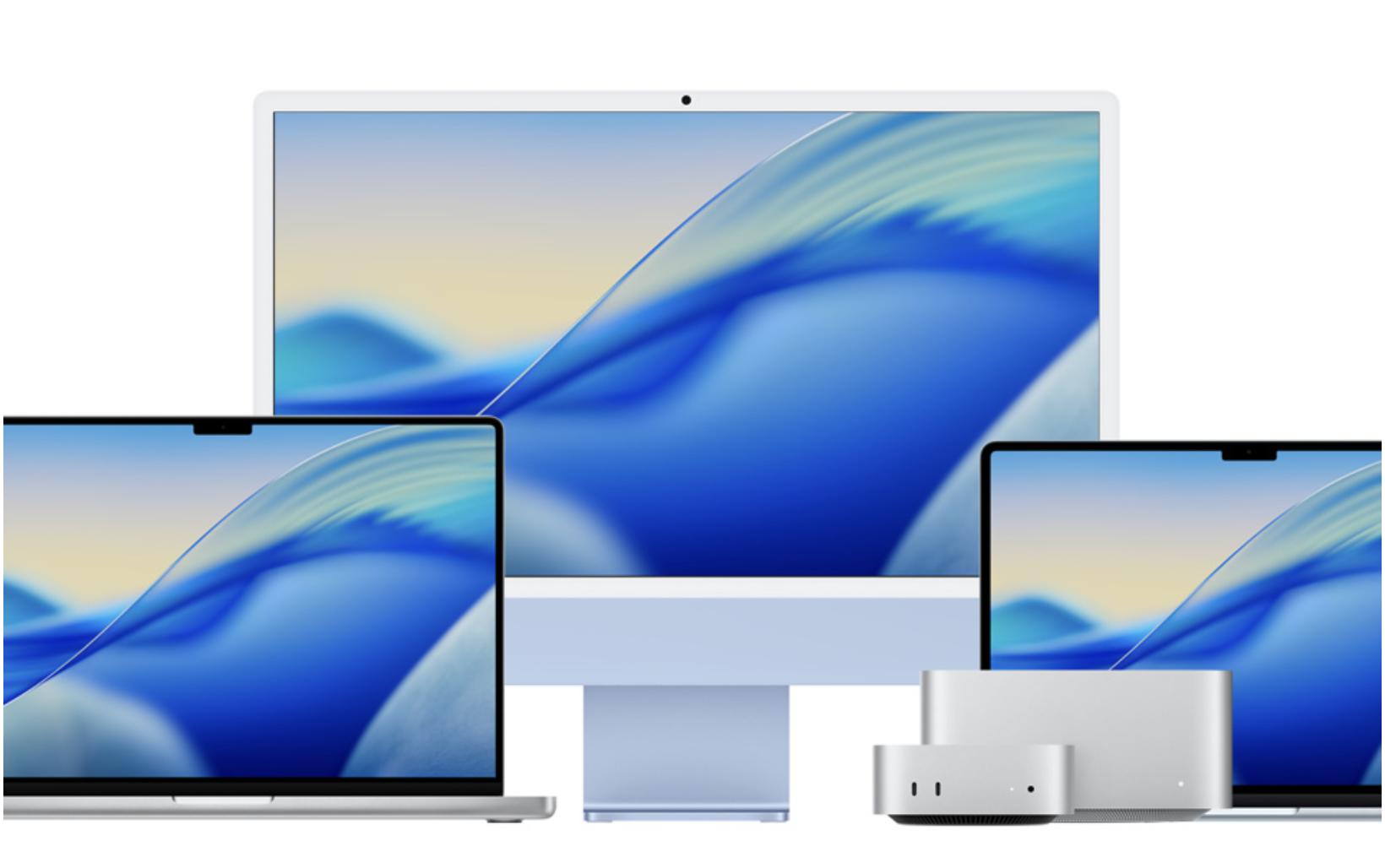
Image source: Apple
First of all, there is a complete unification of the hardware platform. As the M6 chip enters the 2nm era, the energy efficiency ratio of the MacBook has reached an extremely high level. This means that Apple can incorporate a higher - power - consuming OLED touch layer without sacrificing battery life. More importantly, Mac, iPhone, and iPad have long been on the same underlying architecture, and running mobile apps on macOS is no longer a technical challenge.
However, the unification of hardware has magnified the fragmentation in software interaction.
Yes, there are a large number of iPad games on the Mac App Store that can run directly on the Mac. With the help of PlayCover, we can even run "decrypted" mobile games on the Mac without any adaptation.

Image source: PlayCover
But the problem is that using a mouse or trackpad on the MacBook Pro to simulate finger swipes and clicks provides a rather poor experience. Apple is well aware that if it wants the Mac to support more mobile ecosystems, touch is not a "high - end feature" but a basic experience that must be added.
Moreover, from the M1 to the M5 chips, Apple's approach of making only incremental improvements has become more and more obvious. Thanks to its extremely low power consumption and decent performance among ARM computers, the MacBook has always been a hard - to - surpass competitor for Windows in the mid - to - high - end ARM laptop market.
This unique market pattern, where Apple has little to fear from high - end Windows ARM laptops, has led Apple to weaken the update intensity of the MacBook series. Many users even actively choose models with older chips - after all, the experience is quite similar for light use.
In such an environment, the MacBook really needs to "try something new" with a touch screen.
Windows touch - screen laptops have already encountered all the pitfalls
The good news is that before the birth of the touch - screen MacBook, there were already a large number of touch - screen laptops on the market. To be honest, the experience of these laptops is not as good as expected. In terms of hardware, almost all touch - screen laptops have problems such as loose hinges and screen shaking during touch operations. In terms of software, the all - touch interaction of Windows 8/8.1/10/11 is a disaster and is clearly a thankless task.
So, how can the MacBook avoid repeating Windows' mistakes?
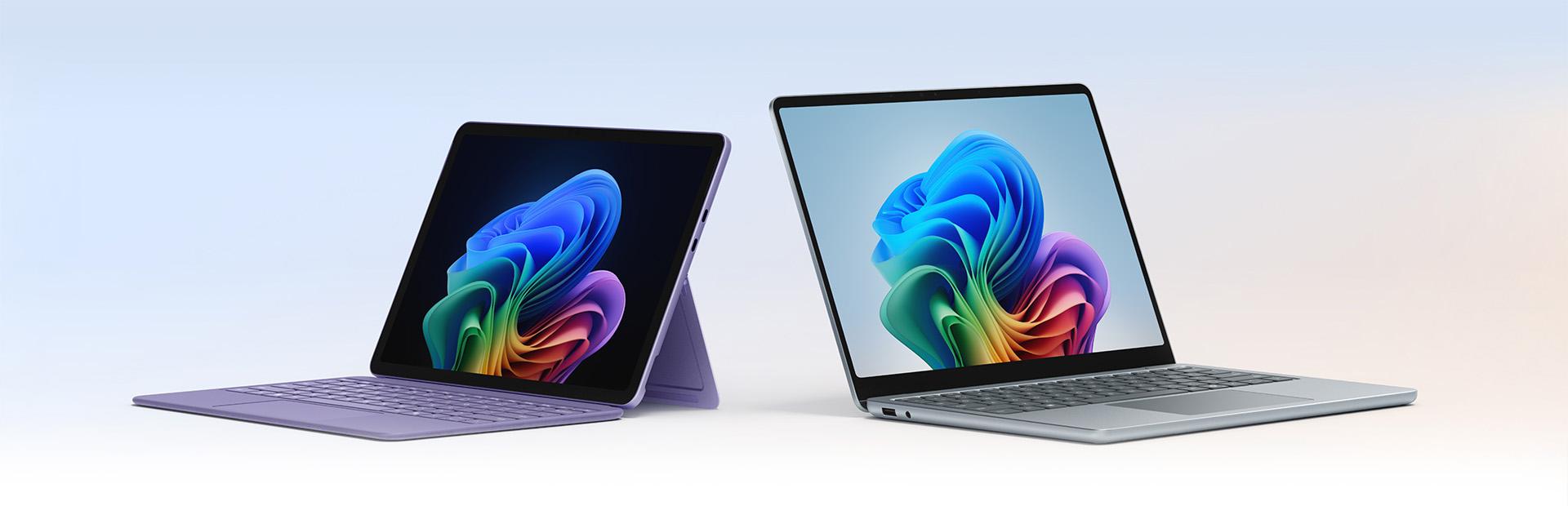
Image source: Surface
In the view of Lei Technology, the "touch - screen MacBook" must first distinguish between scenarios of precise input and fuzzy input.
We know that the desktop system is designed for "precise input", while finger operations are "fuzzy input". Microsoft's failure back then was essentially forcing users to use their fuzzy fingers to click on tiny controls designed for pixel - level cursors. Judging from the exposed solutions, Apple seems to only use touch operations for some fuzzy input, such as screen scrolling, zooming, and clicking on large buttons.
It's worth mentioning that according to the rumors, when the MacBook senses a touch scenario, it will automatically enlarge relevant button controls. At the same time, the overall system interface will also become more similar to iOS.
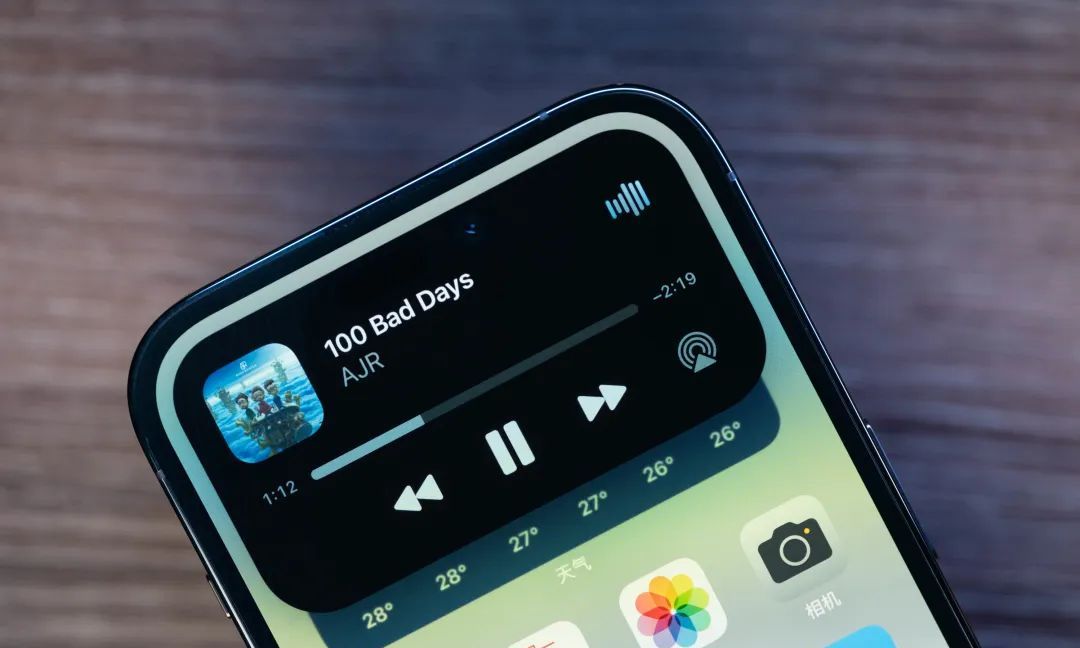
Image source: Lei Technology
Additionally, the rumors also indicate that the new MacBook Pro will introduce the hardware design of the Dynamic Island to integrate the visual symbols of macOS and iOS. In fact, at present, "Live Activities" (Dynamic Island notifications) already have special display effects on macOS. Considering another rumor that Apple is preparing a low - cost entry - level MacBook Air "equipped with the A - series chips from mobile phones", I think this strategy of sharing design elements between macOS and iOS is indeed feasible.
However, if the MacBook launched at the end of the year is really equipped with a touch screen and macOS officially supports native touch, in the view of Lei Technology, the most embarrassed one may not necessarily be other ARM - based Windows laptops, but those 13 - inch iPad Pro models.
The touch - screen MacBook will block the path of high - end iPad Pro
Previously, there were two core reasons why the iPad couldn't run macOS: one was the mismatch in interaction, and the other was the "Apple tax" sharing related to in - app purchases. Now, Apple has added a touch screen to the MacBook but still doesn't let the iPad run macOS. The commercial logic is clear:
Apple never wants to merge the two types of devices in terms of hardware.
The MacBook with a touch screen remains an open - ended productivity tool where users can install software freely. The iPad, on the other hand, continues to adhere to its closed but extremely simple - to - interact - with app store ecosystem. The emergence of the touch - screen Mac actually takes away the touch - interaction ability from the iPad Pro, pushing it completely into vertical markets such as drawing or simple entertainment.
So, in these light - use scenarios, whose performance advantage cannot be reflected? Yes, of course, it's the 13 - inch iPad Pro with the M5 chip and the high - priced Magic Keyboard.
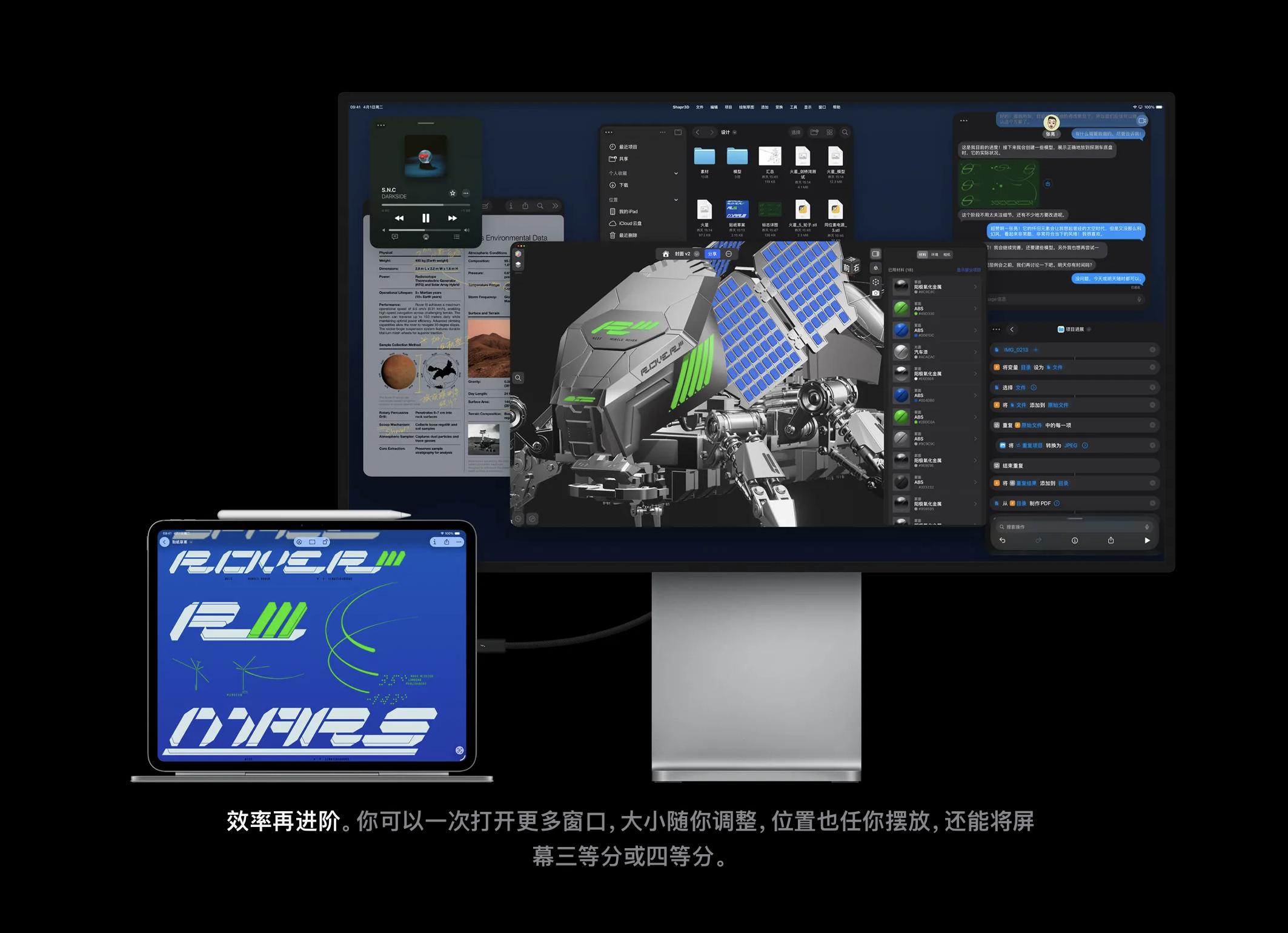
Image source: Apple
It's certain that with the debut of the touch - screen MacBook Pro, the iPad Pro, which focuses on high performance and productivity, will surely face a real challenge: in light - entertainment scenarios, the iPad Pro doesn't have the cost - effectiveness of the iPad Air, iPad mini, or Android tablets. In heavy - load scenarios, the iPad doesn't have the performance of the MacBook Pro. Even in terms of portability, the iPad Pro with a keyboard is heavier than the MacBook Air.
It can be said that the touch - screen MacBook and the foldable iPhone will "encircle" the iPad from two angles.
In the view of Lei Technology, the emergence of the touch - screen MacBook doesn't mean that Apple admits Steve Jobs' mistake. Instead, it seems that Apple has finally found a self - consistent solution in 2026.
This solution not only preserves the bottom line of Mac as an open system but also alleviates the problem of inaccurate finger taps through the Dynamic Island and UI fine - tuning. More importantly, it successfully sets a higher price range for the MacBook against the backdrop of the declining iPad sales.
As for whether the touch - screen Mac will end up being as useless as the Touch Bar? At this time, Lei Technology is not ready to draw a conclusion. But one thing is certain: Apple is best at packaging an unoriginal technology into a "must - buy" new standard.
So, will the debut of the touch - screen MacBook bring touch - screen laptops back to the mainstream and lead the entire laptop industry to progress together, becoming the new direction for laptops? We believe we'll find the answer at the end of 2026.
This article is from "Lei Technology" and is published by 36Kr with permission.